
Sectors
Sectors
Sectors We Serve
Kernel partners with innovators in pharmaceuticals, medical devices, and cosmetics to design rigorous studies, generate real-world evidence, and secure compliant market entry across Jordan and the wider MENA region.

What we do
End-to-end execution is provided for phase I–IV and clinical trials, complemented by real-world evidence and market access services. Quality-by-Design (QbD) principles guide protocol development; Risk-Based Quality Management (RBQM) and standards from the Clinical Data Interchange Standards Consortium (CDISC) are embedded from planning to reporting. Hybrid and Decentralized Clinical Trial (DCT) elements are incorporated where they reduce burden without compromising data integrity.
Core Services

Pharmaceuticals
Pharmaceuticals
protocol and Investigator’s Brochure (IB) drafting, feasibility, start-up, site activation, monitoring under an RBQM plan, vendor oversight, trial-master documentation, data management, biostatistics, medical writing, and publication planning.
tele-visits, electronic informed consent (eConsent), electronic patient-reported outcomes (ePRO) and electronic clinical outcome assessments (eCOA), wearables, home health, direct-to-patient logistics, and validated integrations across Electronic Data Capture (EDC), Clinical Trial Management System (CTMS), and electronic Trial Master File (eTMF).
registries, observational studies, database analyses, cost-effectiveness and budget-impact modeling, and value dossiers for payers.
gap analyses, labeling, country dossiers, national listings, post-approval variations, and lifecycle management across MENA.
safety-management plans, case processing, signal detection, periodic safety reports, safety governance, and inspection readiness.
Medical Devices
Clinical and regulatory strategies are assembled for devices and diagnostics from early feasibility through post-market follow-up. Clinical investigations follow good clinical practice for medical devices. Clinical Evaluation Reports and Clinical Evaluation Plans as well as Performance Evaluation Reports (PERs) for in-vitro diagnostics, are developed to meet European and regional expectations and are adapted for country-specific registrations. Usability, risk, and safety files are integrated to maintain a coherent technical dossier.
Core services
Clinical investigations (pre- and post-market)
study design, ethics and authority submissions, monitoring, data and biostatistics, and compliant clinical reporting.
Clinical investigations (pre- and post-market)
study design, ethics and authority submissions, monitoring, data and biostatistics, and compliant clinical reporting.
Clinical and performance evaluation
CER/CEP and PER development, literature appraisal, gap analysis, benefit–risk justifications, and periodic updates.
Clinical and performance evaluation
CER/CEP and PER development, literature appraisal, gap analysis, benefit–risk justifications, and periodic updates.
Risk, usability, and biocompatibility
risk-management files, usability-engineering plans, biological-safety rationales, and vigilance reporting.
Risk, usability, and biocompatibility
risk-management files, usability-engineering plans, biological-safety rationales, and vigilance reporting.
Software and digital health
Software as a Medical Device (SaMD) life-cycle documentation, cybersecurity files, and real-world performance plans.
Software and digital health
Software as a Medical Device (SaMD) life-cycle documentation, cybersecurity files, and real-world performance plans.
Regulatory and market access
classification, technical-file construction, country registrations, labeling and authorized-representative support.
Regulatory and market access
classification, technical-file construction, country registrations, labeling and authorized-representative support.
Post-market surveillance
Post-Market Surveillance (PMS) and Post-Market Clinical Follow-up (PMCF) plans and studies, periodic safety/performance reports,
Post-market surveillance
Post-Market Surveillance (PMS) and Post-Market Clinical Follow-up (PMCF) plans and studies, periodic safety/performance reports,

Cosmetics
Kernel supports cosmetic brands from concept to compliant market launch and long-term post-market stewardship. We align marketing ambition with scientific evidence and regulatory clarity so that claims are defensible, timelines are predictable, and documentation is inspection-ready.
Services across the Cosmetic lifecycle
Regulatory strategy and registration
Formula review, International Nomenclature of Cosmetic Ingredients (INCI) checks, artwork in Arabic and English, country notifications and listings, and preparation of the Product Information File (PIF).
Claims substantiation
Ethically designed clinical, instrumental, and consumer studies with statistics that support clear, compliant claims.
Post-market surveillance and change control
Structured complaint management, periodic compliance checks, and artwork or formula updates across Stock Keeping Units (SKUs).
Scientific and regulatory writing
Study protocols, reports ready for regulators and retailers, concise marketing summaries, and technical responses to authority queries.
Claims Substantiation (detailed)
Purpose. Claims substantiation establishes credible, reproducible evidence that a product delivers its promised benefits under intended conditions of use. We design studies that connect instrumental measurements, clinician assessments, and Patient-Reported Outcomes (PROs) so that the story is both scientifically sound and consumer-relevant.
Study designs. We employ randomized or controlled designs, split-face or intra-subject comparisons, and cross-over where suitable. Inclusion and exclusion criteria, sample size, application regimen, washout, and time points are set to reflect real use while preserving internal validity.
Claims Substantiation (detailed)
-

Oil & Acne-prone
-

Brightening - Even Tone - Spots
-

Anti-aging -Firmness -Elasticity
-

Sun-exposed skin support
-

Sensitive - Soothing - Redness
-

Texture - Pores - Radiance
-

Hydration - Barrier
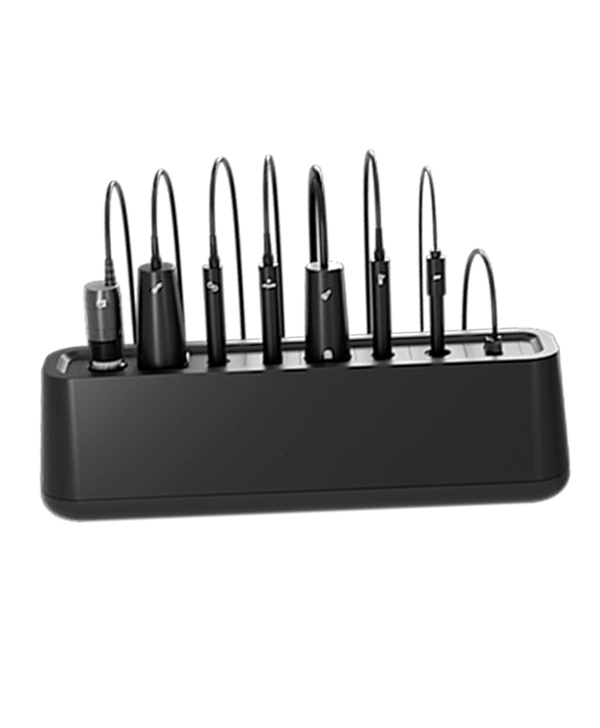
Measurement toolbox
How we translate rules
into your study plan
Define the claim and map it to the six Common Criteria.
Select appropriate proof types (instrumental study, expert grading, consumer perception, literature).
Pre‑specify methods and endpoints; standardize imaging and grading across visits.
Document methodology, results, and limitations; maintain audit‑ready archives.
Draft conservative, regulator‑aware claim wording aligned to the generated evidence.